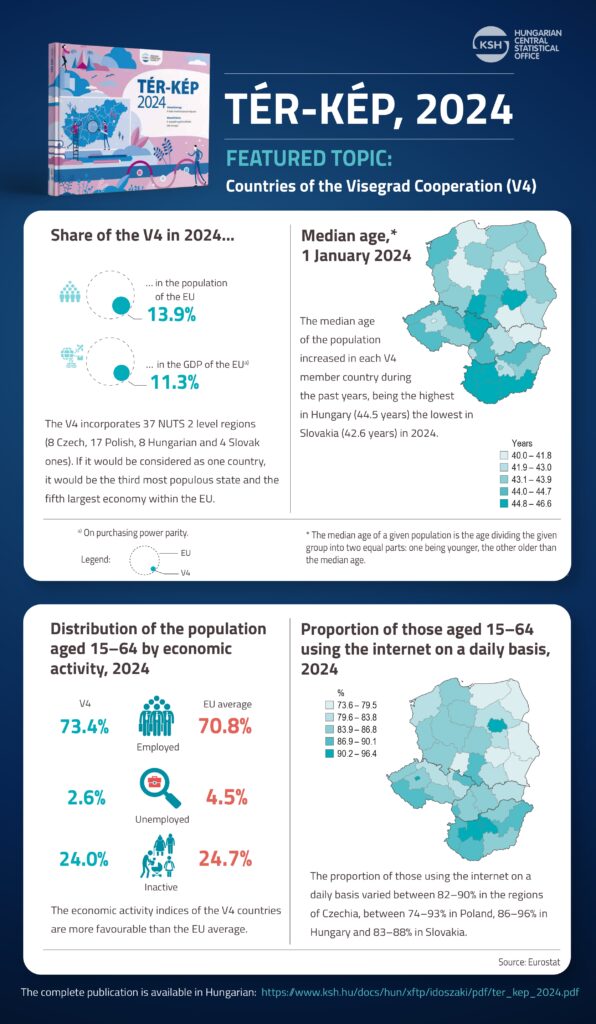
This region has the potential to become an economic powerhouse. However, there is a ‘but’.
A few days ago, I came across this infographic about the Visegrad countries on the website of the Hungarian Central Statistical Office (KSH) and found it interesting.
It’s not revolutionary, but it’s a gentle reminder of this opportunity and potential that has never been exploited enough.
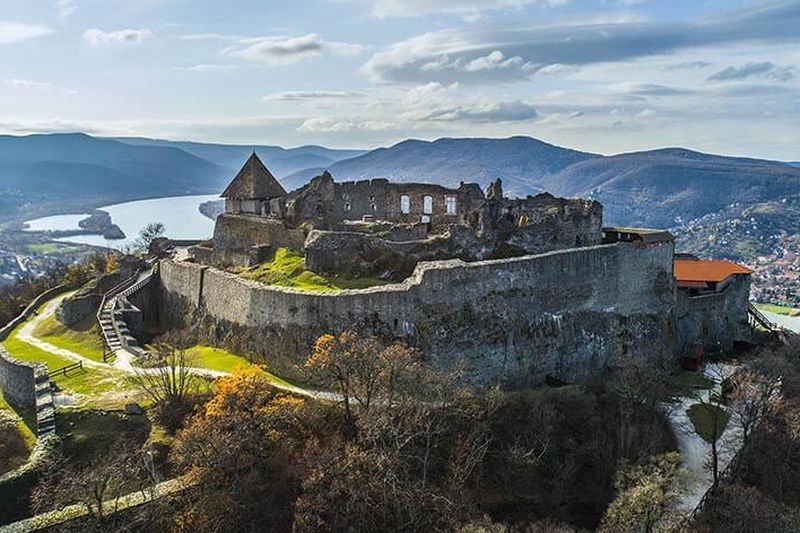
The Visegrad Group (V4), formed on 15 February 1991 in Visegrád, Hungary, consists of four Central European nations: the Czech Republic, Hungary, Poland, and Slovakia. It was established as a direct effort to overcome post-Cold War divisions, focusing on economic, military, and cultural affairs.
On 1 May 2004, all four countries jointly became EU member states, after which the importance of cooperation began to fade.
I strongly believe that Central and Eastern European countries (beyond the V4) should strengthen their ties, not as an alternative to the EU, but as a natural unity.
This region could be an economic powerhouse, but to achieve this, national governments (and citizens too) must overcome their short-term interests.
Further information about the Visegrad Group.