One of Europe’s most popular music festivals came close to shutting down—but then its founder returned.
As we previously reported, news emerged in the autumn suggesting that Budapest’s iconic Sziget Festival was on its “deathbed.” The Luxembourg-based Superstruct Entertainment, which owns the festival, announced that it no longer wished to take further financial risks and intended to terminate its lease agreement for the festival grounds.
The reasons were primarily financial. Sziget Zrt. closed 2023 with a loss of 1.8 billion forints, recorded an even larger loss of 3.9 billion forints in 2024, and expects another deficit exceeding 2 billion forints in 2025.
Later, however, it became clear that the Budapest City Council had given the green light for Károly Gerendai—one of the festival’s founders—to return, with the explicit expectation that he would help “save” Sziget.
Gerendai is an iconic figure in the festival’s history. He founded Sziget at the age of 22, and under his leadership it grew into a globally renowned event. He has now returned as the strategic head of Sziget Zrt.
In a long and detailed interview with the tabloid Blikk.hu, Gerendai explained why he believes the festival ran into trouble. According to him, Sziget became loss-making because the Luxembourg-based company operates all of its roughly 80 festivals using the same business model. While this approach may be logical from a corporate perspective, Sziget’s original success was rooted in the fact that it was different—distinct from its competitors in many ways. In recent years, he argues, the festival has partly lost that unique character.
Another key problem was the excessive focus on the lineup. Gerendai sees this as a dead end: audiences today tend to see major international stars at standalone concerts rather than at festivals.
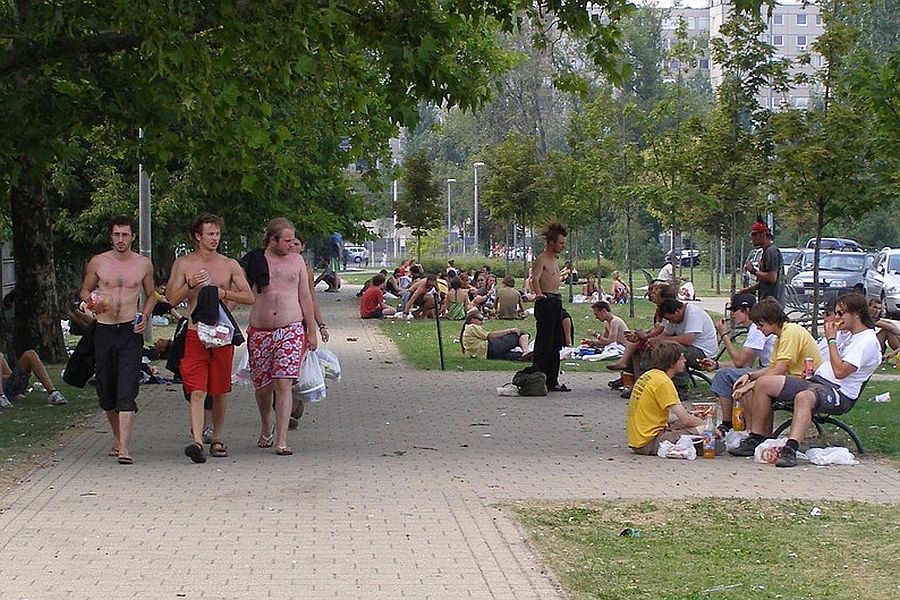
The conclusion, he says, is clear: the emphasis must shift back to atmosphere. Sziget’s true strength lies in its distinctive community experience and its diverse cultural and holiday-like environment—something that can offer far more than a single 90-minute concert.
Looking ahead, the festival plans to open up more deliberately to older generations, while also featuring a greater number of Hungarian performers. There will even be a dedicated Hungarian stage. At the same time, international visitors will continue to be a key part of Sziget’s audience.
Gerendai also promises a more colorful and genre-diverse musical program. While specific names for the 2026 edition are still “under development,” and the organization is admittedly behind schedule, he insists that there will still be major acts. Importantly, the festival will move beyond a narrow focus on mainstream teen pop and electronic music, bringing back more rock and world music artists as well.
Due to financial and organizational constraints, the festival will be “only” five days long this year, running from August 11 to August 15.