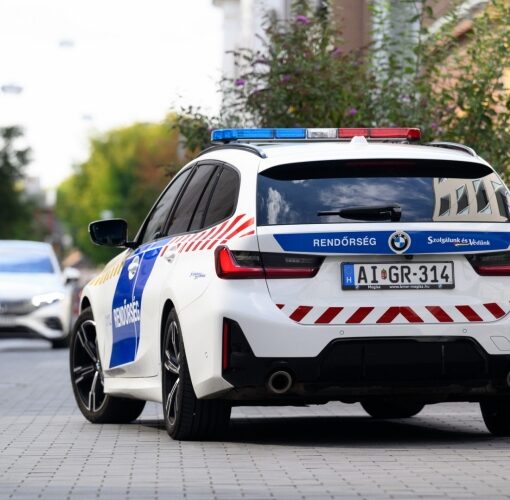
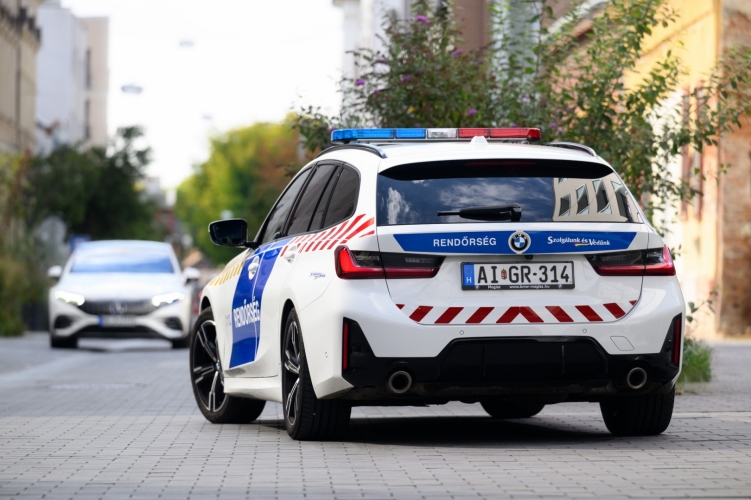
Police, customs authorities and German investigators have revealed how cocaine is smuggled into Central Europe—and why Hungary has become an important transit point.
A joint press conference was held by Hungary’s National Bureau of Investigation (KR NNI), the National Tax and Customs Administration (NAV), and the German Customs Criminal Investigation Office to present the details of two major cocaine seizures and the growing challenge of container-based drug trafficking.
Cocaine Routes Are Shifting Across Europe
According to investigators, international cocaine trafficking via shipping containers has doubled in recent years.
Large shipments originating in Colombia and Ecuador are no longer arriving exclusively through the major ports of Rotterdam and Antwerp. Increasingly, traffickers are using ports in Central and Southern Europe, particularly the German ports of Hamburg and Bremen.

The drugs are typically concealed within legitimate banana shipments. Containers are often transshipped in Panama before continuing to Europe.
Authorities explained that the region’s largest banana importer is a Polish company whose “banana trains” regularly travel through Hungary or onward to Romania. Smugglers usually remove the cocaine before the shipment reaches its final destination, either during transit or from empty containers on their return journey.
Record-Breaking Seizure: 522 Kilograms of Cocaine
On November 24 last year, French customs authorities alerted Hungarian investigators about a suspicious shipment bound for Hungary. Intelligence suggested that narcotics had been hidden inside 20 containers.
The cargo left Ecuador on October 18, remained in Panama between October 23 and 28, and arrived in Bremen on November 17. From there, six containers were sent to Hungary and fourteen to Romania.
German authorities inspected two of the containers in Bremen using X-ray scanners and sniffer dogs, but found nothing.
Despite the negative results, Hungarian investigators launched a cross-border operation involving authorities in Germany, the Czech Republic, Slovakia, Hungary, and NAV customs officers.

At the port of Csepel in Budapest, officers manually searched approximately 7,000 banana boxes. Hidden on a single pallet, they discovered 438 cocaine bricks weighing a total of 522 kilograms.
The estimated street value of the shipment was around 15 billion forints (€37.5 million).
According to the authorities, this was the largest cocaine seizure ever recorded in Hungary.
Another Major Seizure This Spring
Responding to changing trafficking routes, Hungary’s National Police Headquarters, the KR NNI, and NAV established a joint task force focused on container-based drug smuggling.
Their intelligence gathering and risk analysis led to another significant breakthrough this spring.
Investigators noticed unusually heavy container traffic arriving from Romania. On April 30, they inspected a container that had returned from Arad, Romania, to a logistics facility in Csepel.
During the search, officers discovered 72 kilograms of cocaine.
The shipment had an estimated black-market value of approximately 2 billion forints (€5 million).
High-Tech Tools in the Fight Against Drug Smuggling
Customs officers and investigators are increasingly relying on advanced technology to identify suspicious shipments.
According to officials, inspections now routinely involve:
- Cargo X-ray scanners
- Portable backscatter X-ray devices
- Endoscopic cavity inspection equipment
- Drug-detection dogs
- Intelligence-based risk analysis
These tools help authorities inspect containers without having to unload entire shipments.
Hungary as a Regional Transit Hub
Authorities said that recent investigations and risk assessments indicate that Hungary has become an important hub for cocaine trafficking in Central Europe.
Rather than being intended solely for the Hungarian market, many shipments appear to pass through the country before being distributed across the wider region.

For this reason, Hungarian authorities have strengthened cooperation not only with NAV and German customs investigators, but also with neighboring countries’ law enforcement agencies and with Europol.
Officials emphasized that combating international drug trafficking requires close international cooperation, as criminal organizations increasingly operate across multiple countries and transport networks.
Photos: Hungarian Police