But this is only half-funny, because some of them are aggressive.
Tropical fish are living in the canal that carries the surplus water of Lake Hévíz to Lake Balaton, Hirado.hu, the public service news site, reports.
According to data from the Balaton Limnological Research Institute, 89 new fish species have appeared in Hungarian waters over the past 24 years. Most of the newcomers are warm-loving aquarium species such as Yucatan mollies, lemon cichlids, redhead cichlids, or predatory jaguar cichlids.
But how do these fish end up in the Hévíz Canal?
Well, because “their owners may have grown tired of them, or the fish no longer fit in the aquarium. They didn’t want to kill them, and they can’t take them back.”
According to a researcher interviewed by the outlet, the solution would be “to develop a return system for unwanted aquarium pets.”
Unfortunately, the article does not go into detail, though it would be an exciting topic.
The warm-water-loving species currently remain in the canal, but it is worrying that — thanks to climate change — they now happily swim even in the cooler stretches.
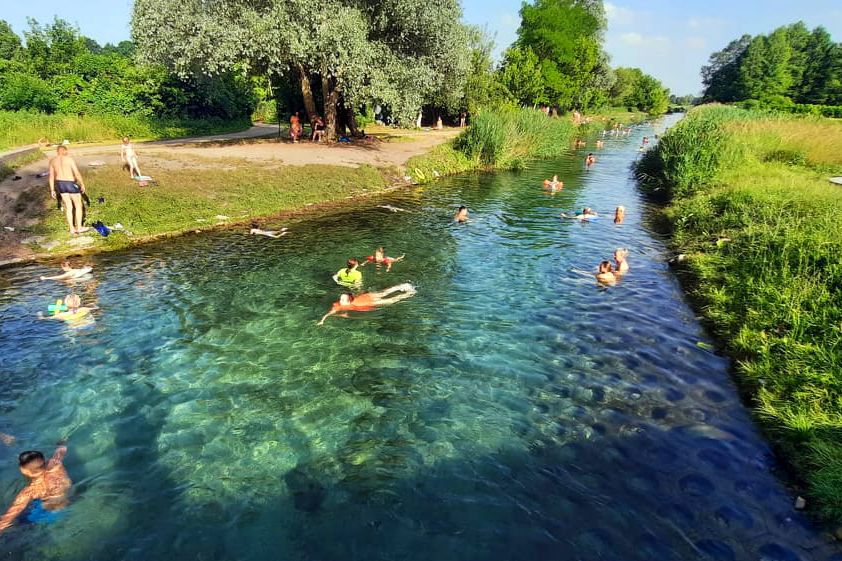
People who bathe in the Hévíz Canal (this is not entirely legal, but many do) are reportedly already being eagerly nipped by the small tropical fish. There are no piranhas yet, but recently a few young snakehead fish were also found. Like the alligator snapping turtle, they are aggressive creatures and pose a danger to native fish.
The Hévíz Canal
The Hévíz Canal (Hévíz-csatorna) is a natural warm-water channel in western Hungary, originating from the world-famous Hévíz Thermal Lake, the largest natural thermal lake suitable for bathing in Europe. The stream stretches for about 13 kilometers and carries the lake’s mineral-rich, slightly radioactive thermal water toward the Zala River and Lake Balaton.Thanks to the constant geothermal supply, its temperature usually remains between 20 and 25°C in winter and becomes even warmer in summer, making it possible to swim or paddle in the stream throughout the year—often creating a magical atmosphere with mist rising from the warm water on cold days. The stable warmth supports a rich ecosystem with unique fauna, water lilies, and tropical-like vegetation. The Hévíz Canal is popular among visitors for winter swimming, kayaking, and nature photography, offering a peaceful and less crowded experience compared to more traditional tourist sites. While some sections are accessible for recreation, access rules can vary, so it is recommended to check local information. The nearby town of Hévíz, close to Lake Balaton, is a major spa destination well known for its wellness facilities and outdoor activities.