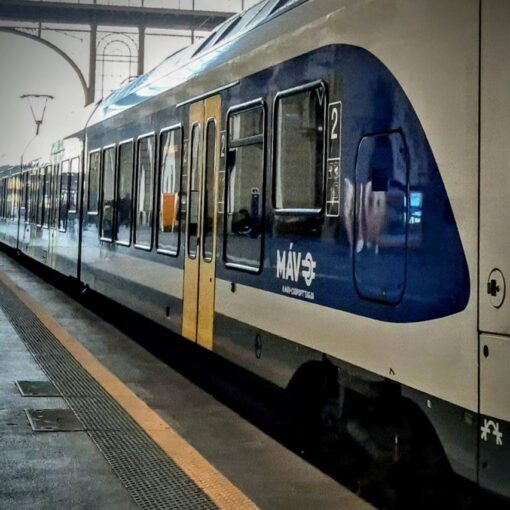
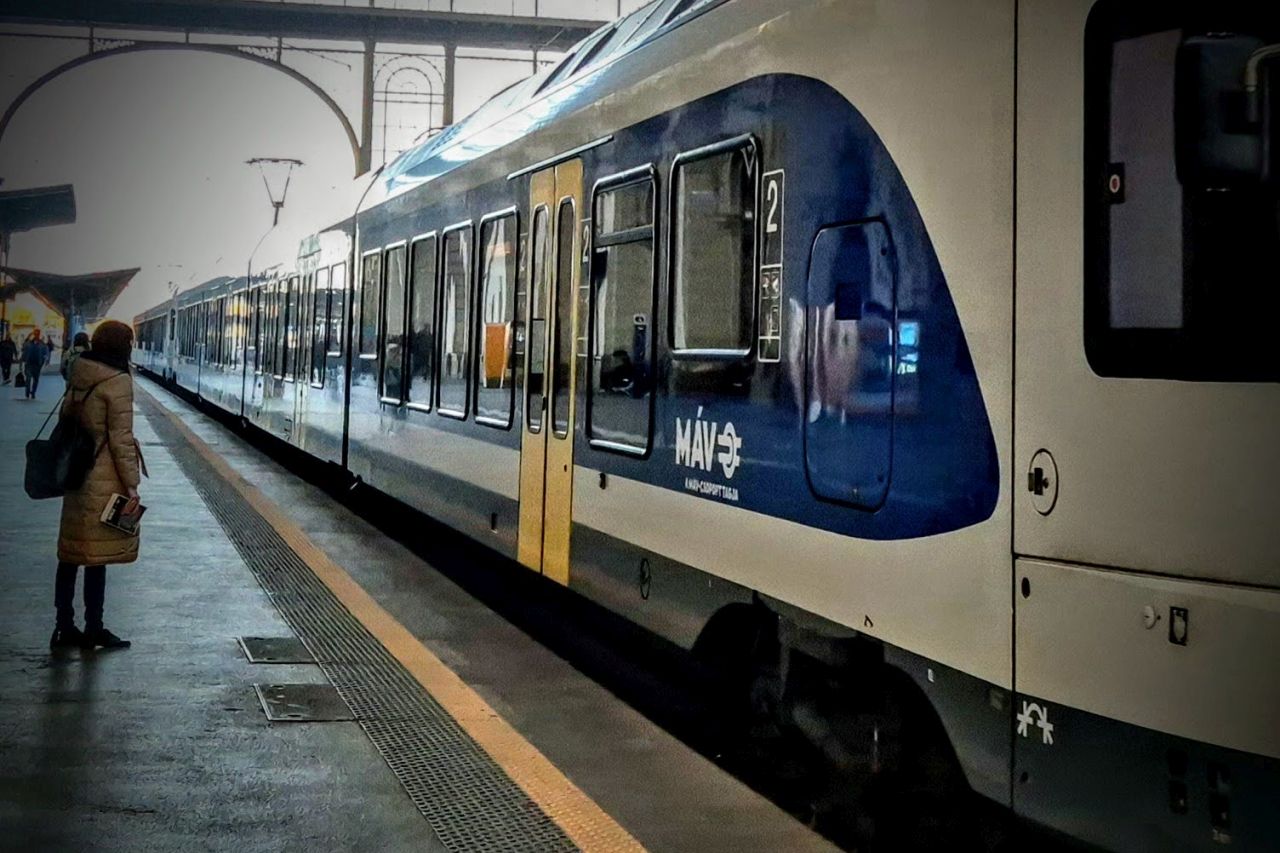
I am not sure if it is worth a daily trip.
A few years ago, the Hungarian “floating village” became something of an internet sensation, with photos flooding social media and even National Geographic publishing some of them. (Here and here.)
The “floating village” was built on an artificial lake (Lake Bokodi), which was used as cooling water for the nearby power station.
There were fish in the lake, perhaps they enjoyed the warm water.
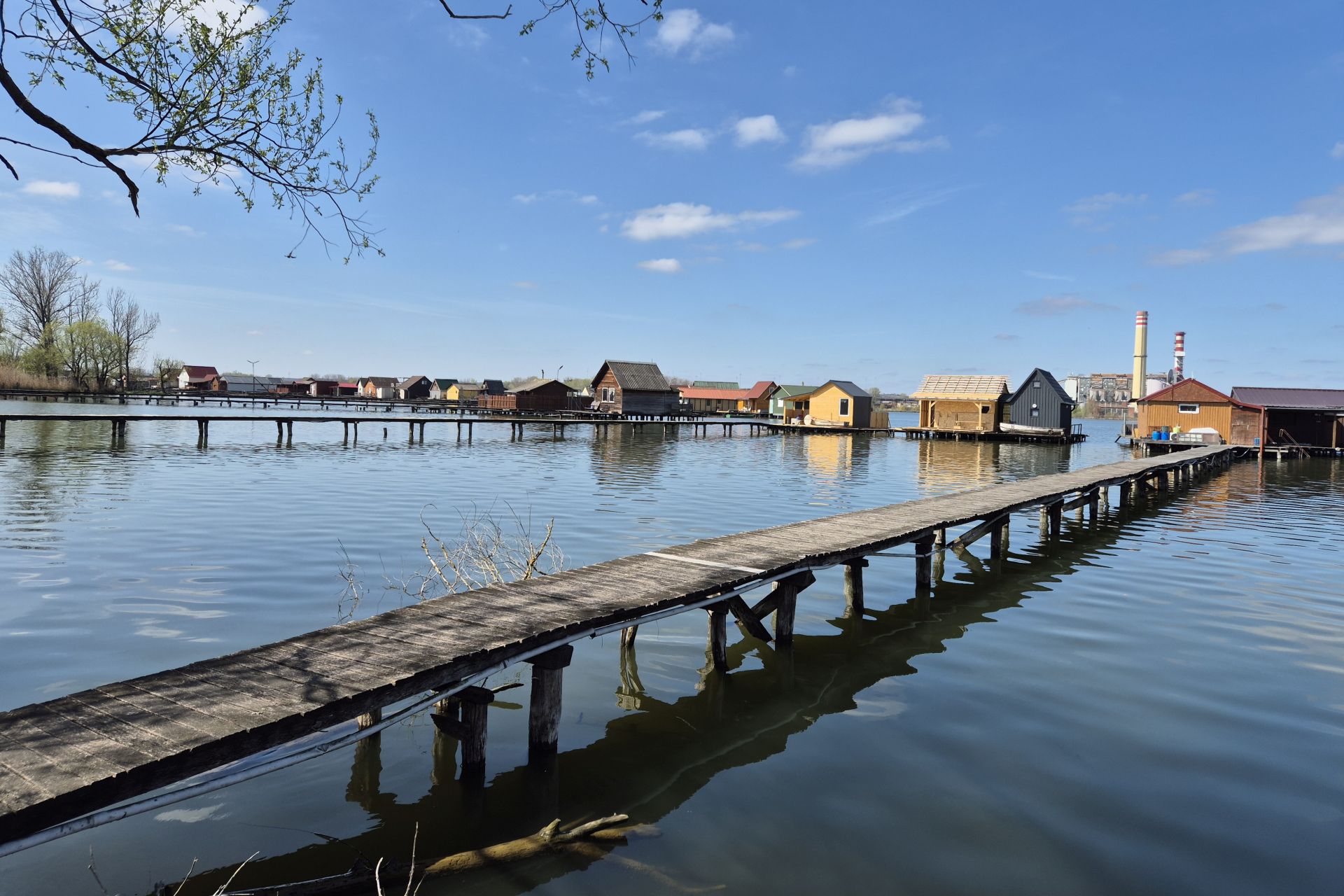
The locals began to use it as a fishing lake and built makeshift cabins (huts) over the water, with wooden piers connecting them to the shore.
This was during the communist era, when Hungarians could not travel abroad, so this kind of creativity was common and necessary.
Now the situation has changed, the power station has stopped working, but the houses and the atmosphere have stayed with us.
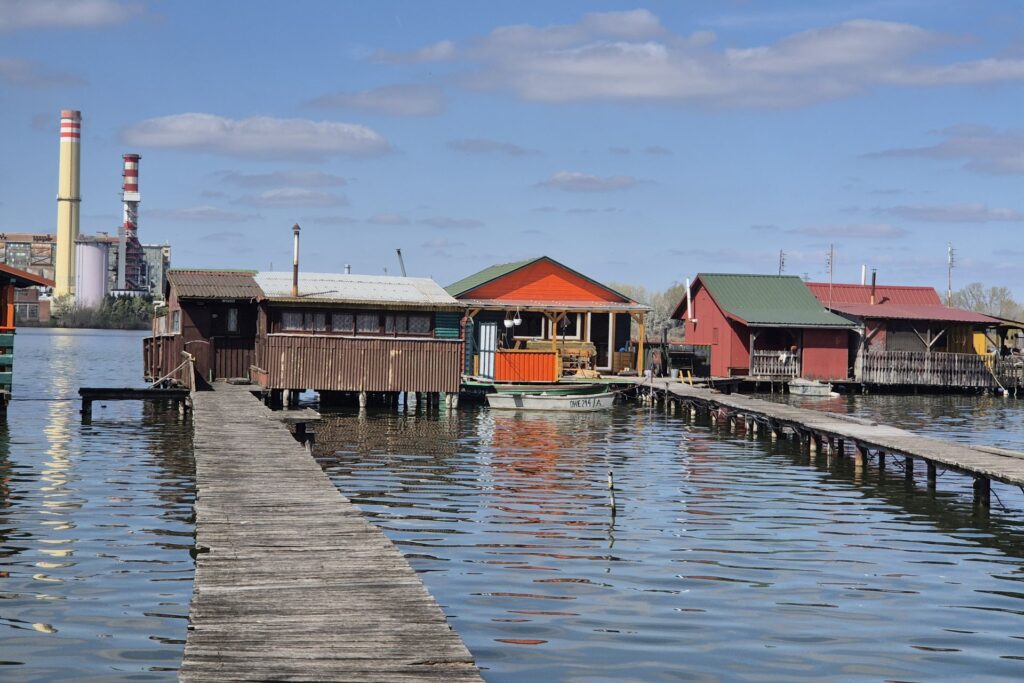
The ‘floating village’ is certainly picturesque, but before you put it on your bucket list, read on.
We were driving to Tatabánya when we saw the road sign “Bodok”. As the weather was perfect and we had time, we changed our route. The GPS led us – party on dirt roads – to a “café and chill terrace”, which turned out to be a “centre” of tourism. It is one of the huts where you can sit down, get a view, some snacks and drinks and some kind of guidance.
There is no price for anything, it is up to you how much “donation” you live in a jar. A little embarrassing, but this is literally the top of the lakeside infrastructure.
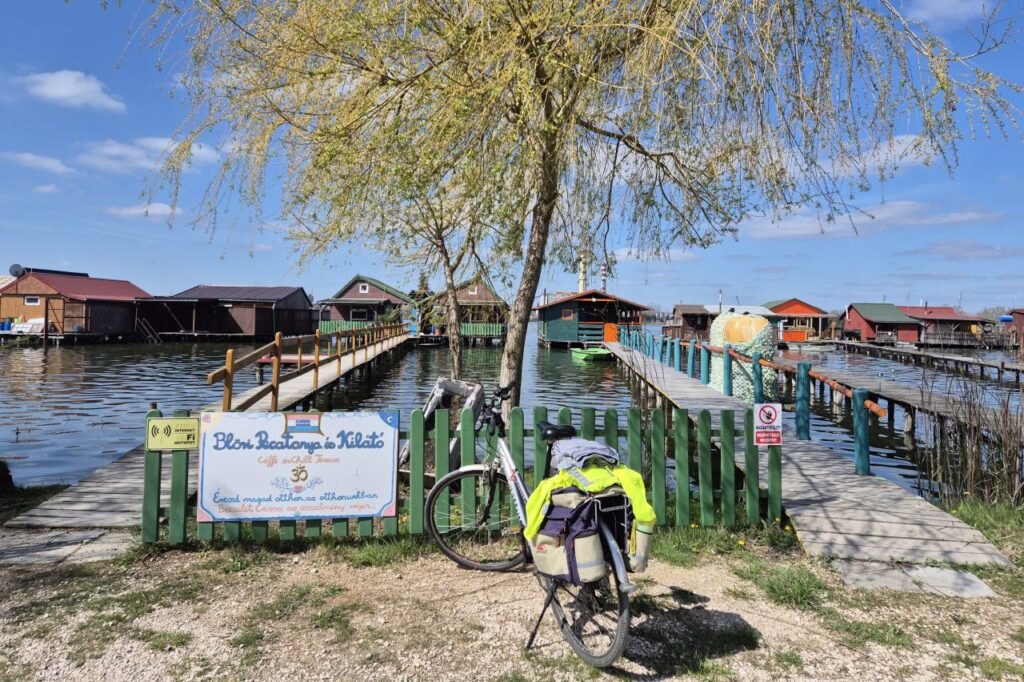
The center of tourism
Theoretically, the shore belongs to the power station and is free to walk along, but in practice the houses and piers are private properties and closed to the public.
Apart from taking a few pictures and posting them on Instagram, there is not much you can do here.
In my opinion, it is simply not worth coming here by public transport from Budapest (or anywhere else) as a day trip. There is a good chance that you will be disappointed.
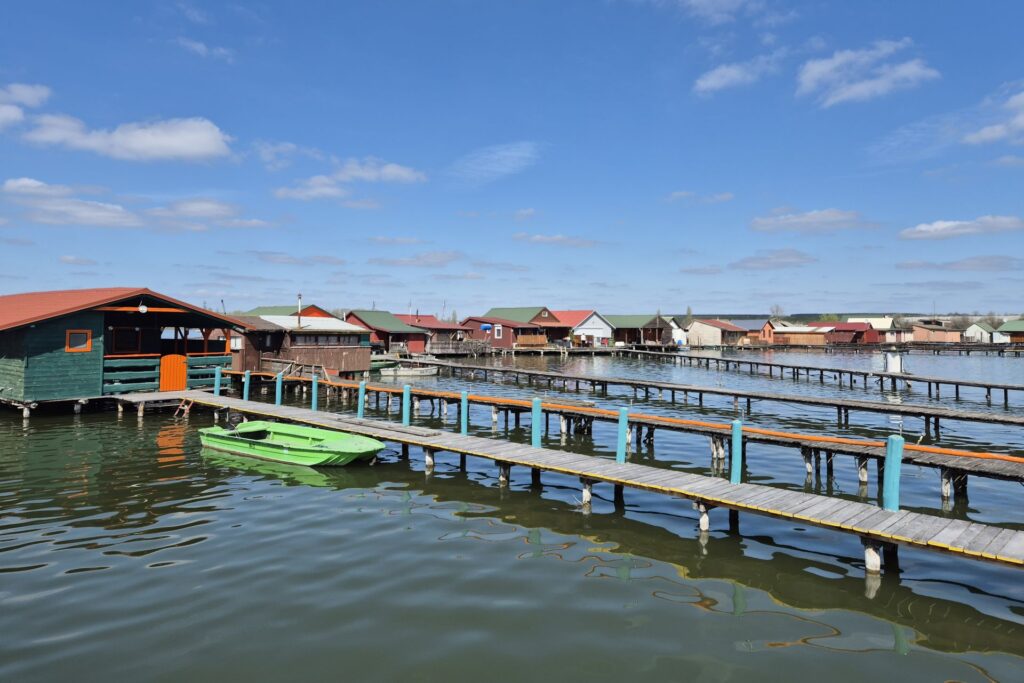
However, it can be an option if you are going somewhere nearby and – like us – are curious about this curiosity.
From this point of view it is important that Lake Bokodi is close to the Vienna-Budapest motorway (M1) (15-20 kilometres) and it can be a nice and memorable stopover. But nothing more.
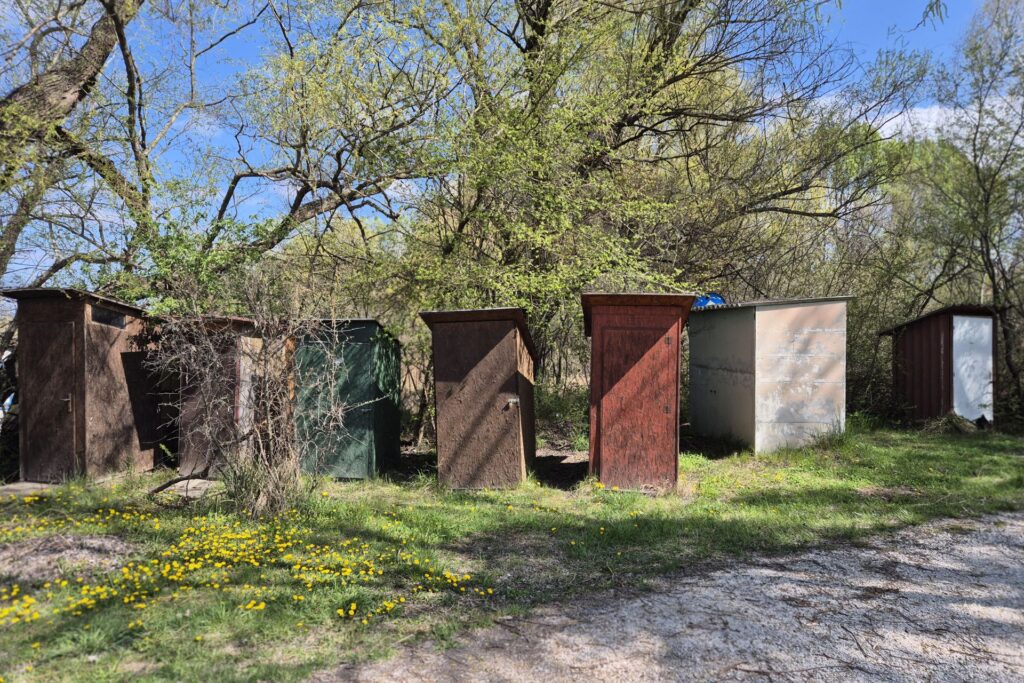
Lakeside infrastructure